One system, every step of the season
Five parts of the workflow, from enrollment to the inspection pack. Each one runs on the records you already keep.
Know exactly where you stand
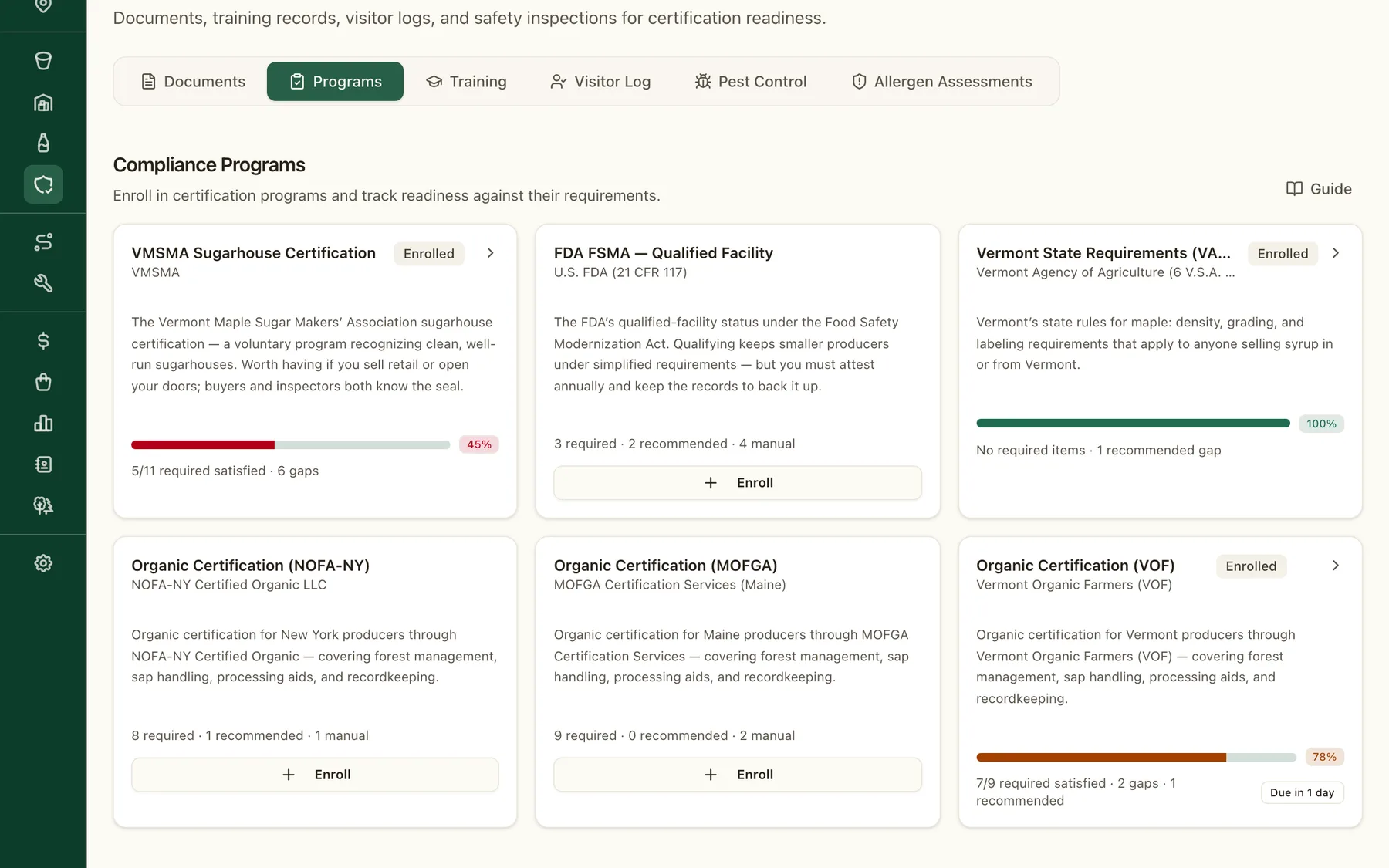
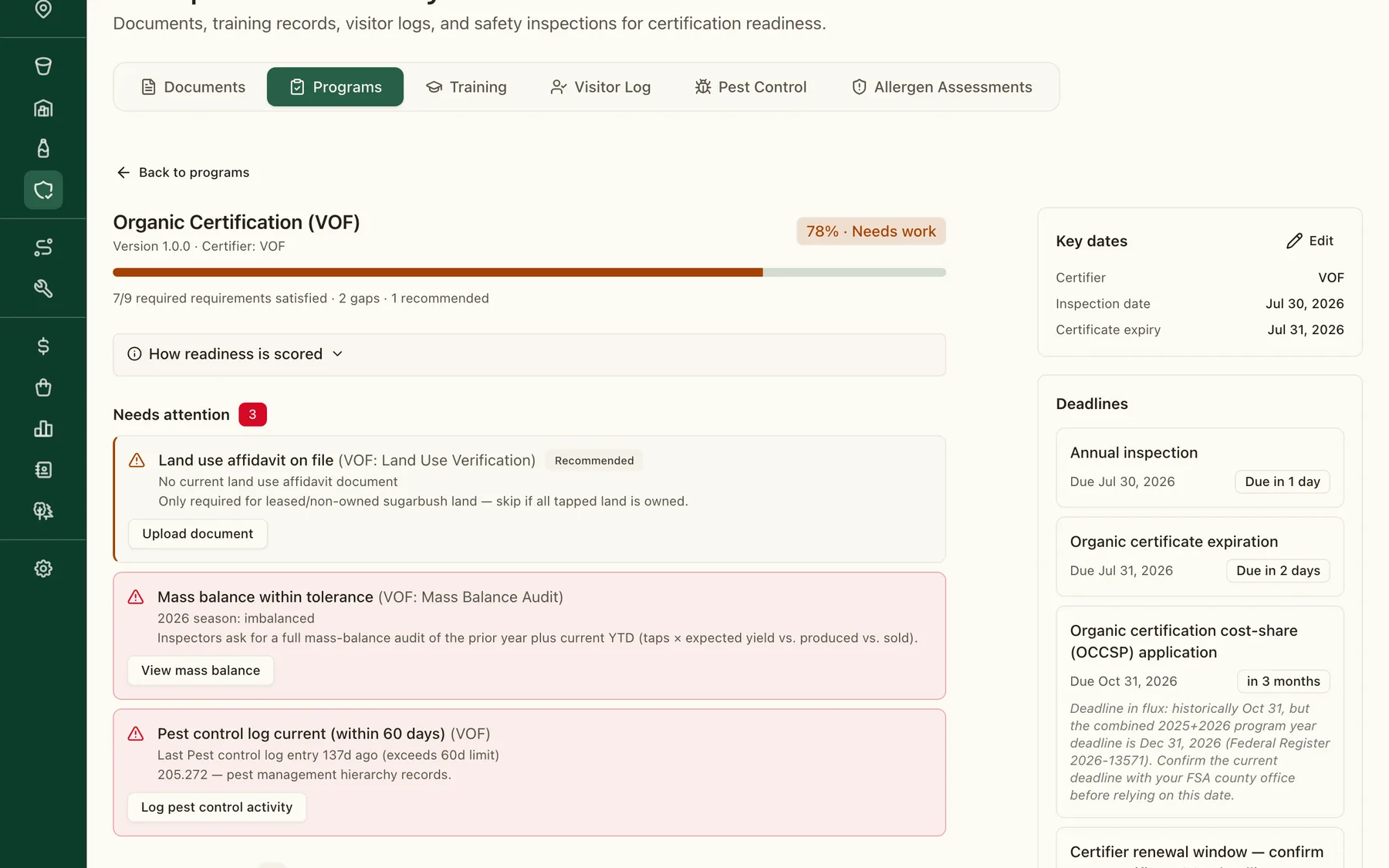
Six packs, each built from the certifier’s own requirements and cited back to the rule behind them: 21 CFR 117 for FSMA, 205.272 for organic pest management, 6 V.S.A. ch. 32 for Vermont. Enroll in the ones that apply and each is scored on its own terms.
VMSMA Sugarhouse Certification
Vermont Maple Sugar Makers' Association
Organic Certification (VOF)
Vermont Organic Farmers
Organic Certification (MOFGA)
MOFGA Certification Services — Maine
Organic Certification (NOFA-NY)
NOFA-NY Certified Organic — New York
FDA FSMA — Qualified Facility
U.S. federal food safety rule (21 CFR 117)
Vermont State Requirements
Vermont Agency of Agriculture
Every program deadline — renewals, reviews, submissions — resolved from the programs you are enrolled in.
Reminders before each deadline, in Sapline and your morning brief.
Logged where the work happens
Each one has its own place in the app, and each one feeds the inspection pack.
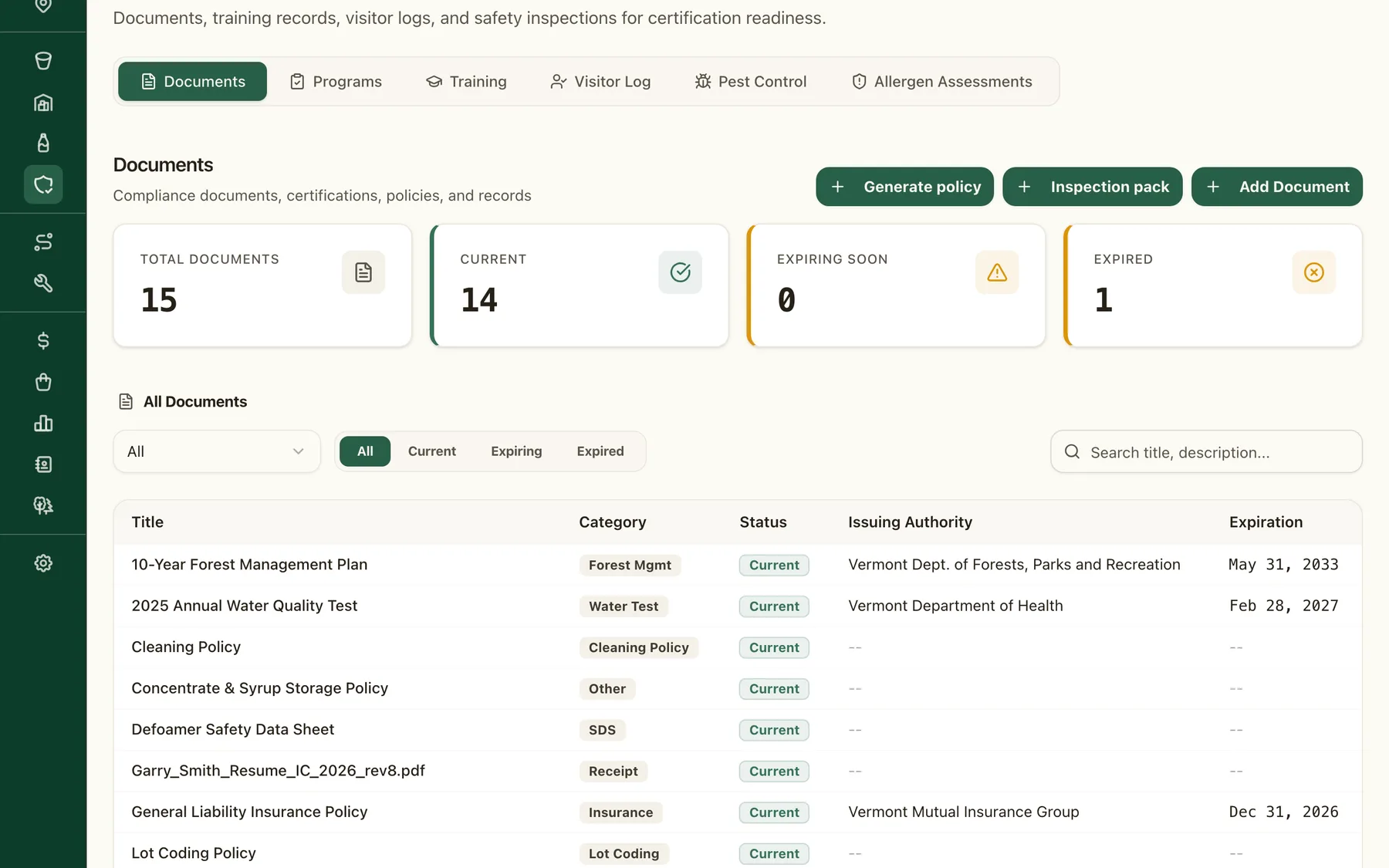
Compliance documents
Store and organize food safety plans, SOPs, permits, and certifications. Everything in one place, not scattered across binders and email.
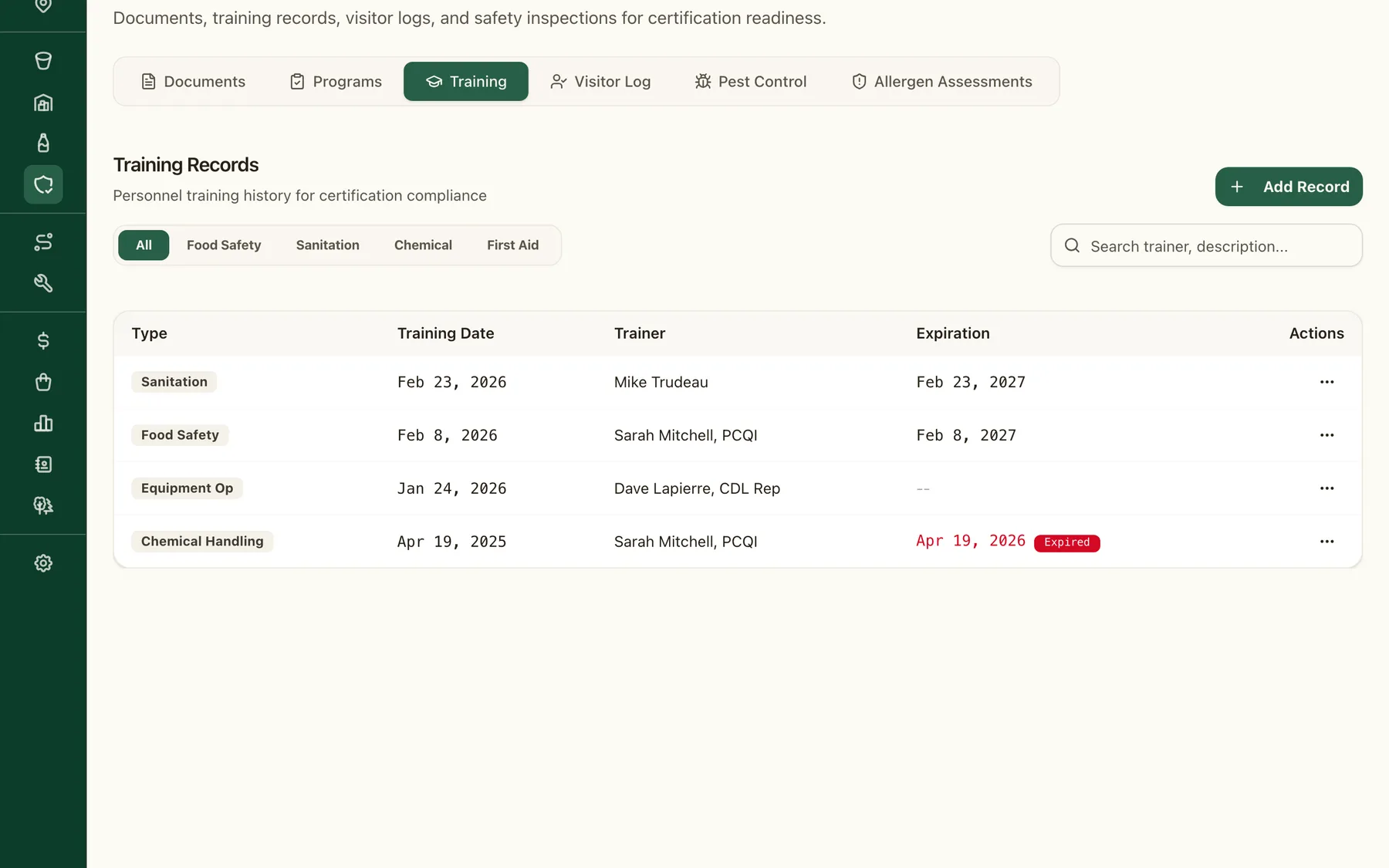
Training records
Log employee training sessions with dates, topics, and completion status. Show inspectors that your crew is trained and current.
Visitor logs
Record facility visitors with timestamps and purpose. A simple requirement that's easy to forget — until someone asks for it.
Pest-control logs
Track pest monitoring, treatments, and follow-ups. Maintain the records that food safety programs require.
Allergen assessments
Document allergen risks and controls for your facility. Keep assessments current and reviewable.
Audit & inspection support
Traceability and mass balance reports double as audit evidence — and they feed straight into program readiness and the inspection pack. Nothing gets compiled by hand.
Policies you didn’t have to write, in a pack you didn’t have to assemble
The difference between generated and boilerplate
Each one is written from your own setup: your lot code format, your evaporator, your storage. When something changes, the policy is regenerated and versioned, so the binder never carries last season’s process.
- Lot coding
- Cleaning
- Evaporator shutdown
- Off-season start-up
- Allergen separation
- Disposal
- Concentrate & syrup storage
Every requirement, with the evidence or the gap
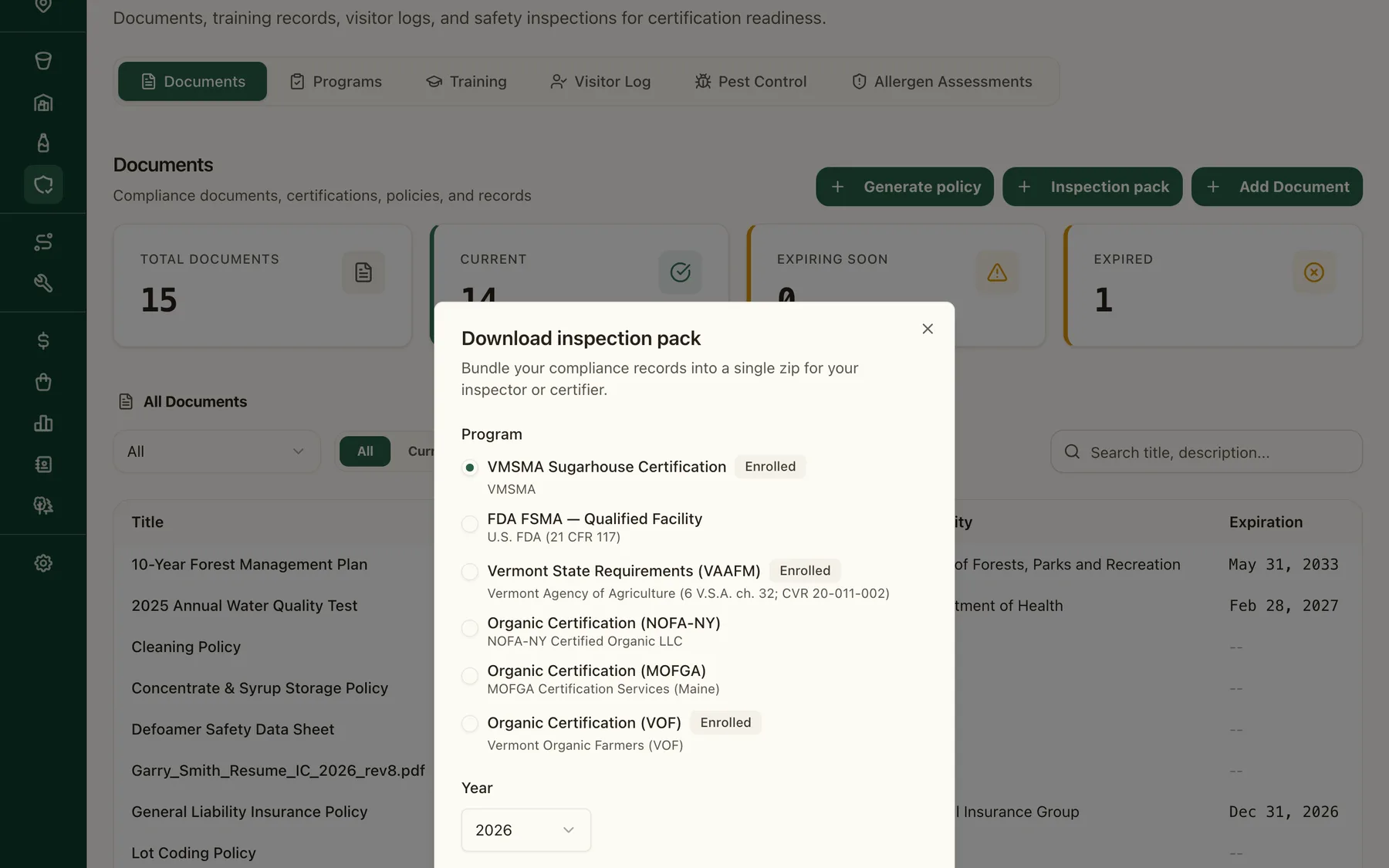
Pick a program and a year. Every requirement comes through with its status and the records that answer it, and anything missing is listed as a gap on the manifest instead of leaving a quiet hole for the inspector to find.
Real output from a fictional 11,000-tap operation. No sign-up.
Organic certification support
Sapline supports the workflows producers need for organic programs — with program packs for VOF, MOFGA, and NOFA-NY that score your readiness requirement by requirement.
Live now
- Traceability chain that supports certification audits
- Mass balance report for inspector review
- Barrel inspection tracking with fill confirmations
- Compliance document management with expiration alerts
- Equipment report export for inspectors
- One-download inspection pack for organic audits
Coming soon — exportable boiling & canning log reports, and additional state and provincial program packs.
When the inspector asks, the answer shouldn't take a week to compile. Your records are kept as you work — the binder is one download.
Connected workflows
Bottling, Inventory & Traceability
Traceability and mass balance feed directly into compliance records
Learn moreEquipment & Maintenance
Calibration records and maintenance logs support food safety programs
Learn moreForecasting, Collection & Boiling
Production batch records tie back to collection and boiling data
Learn more